


Before the sanctuary, before the steeple, there was the Hush Harbor—hidden in the woods, humming with the breath of fugitives who refused to surrender their souls. Baby Suggs’ Clearing echoes this lineage of secret gathering and wild liberation.
This episode features Afrofuturist worldbuilder Nya Abernathy and elder Leroy Barber, guiding us into the deep roots of Black spiritual imagination.

When society demands our contortion, womanism calls us back to our truth, our dignity, and our divine complexity. Together, we trace how womanist thought expands, critiques, and completes Black Liberation Theology through an embodied spirituality rooted in survival, joy, and revolutionary truth-telling.

The Clearing is more than a scene—it is a sanctuary of sacred refusal, a site where Black bodies reclaim their worth and where truth blooms beyond the reach of white theology. Together, we explore how Baby Suggs’ sermon of self-love, embodied liberation, and communal healing continues to instruct us on what it means to resist, to remember, and to reimagine the sacred on our own terms.
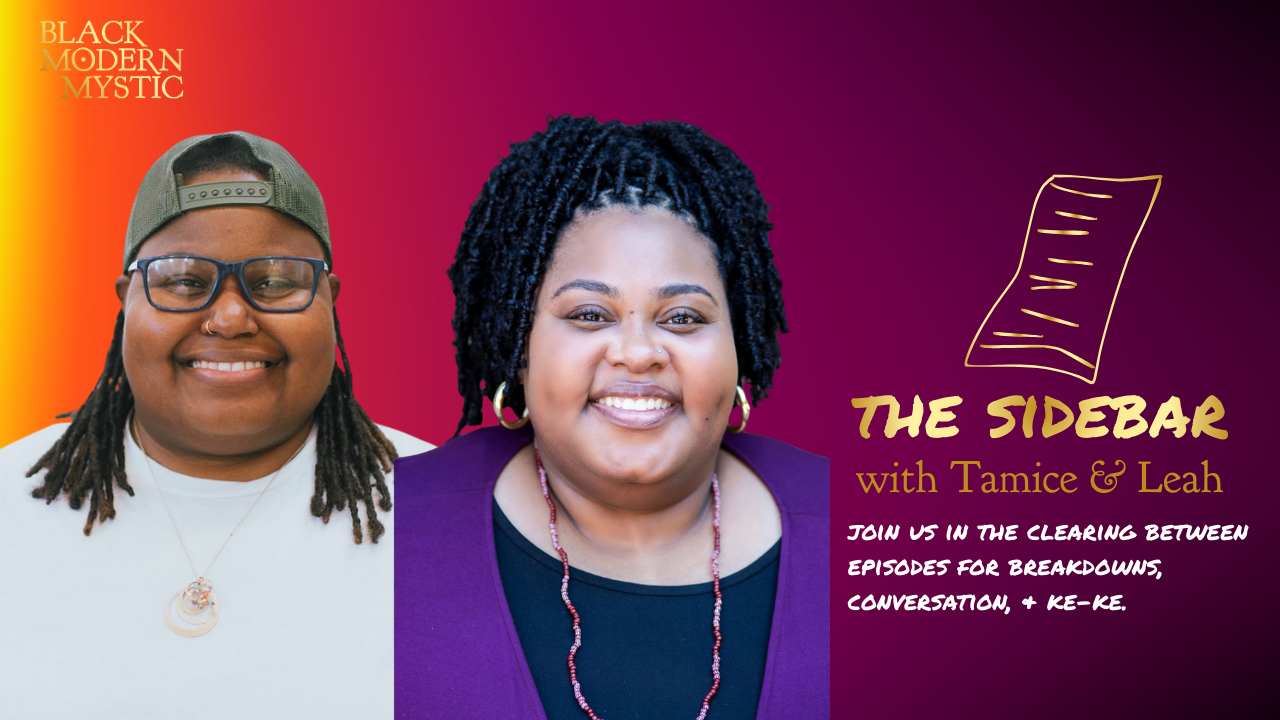
In this inaugural episode of the Black Modern Mystic Sidebars, hosts Tamice and Leah explore the themes of womanist theology, the significance of nature, and the role of pastoral care in liberation. They reflect on Toni Morrison's work, particularly the character Baby Suggs from 'Beloved', and discuss how these themes intersect with their personal experiences and the broader cultural context. The conversation emphasizes the importance of loving one's body, connecting with nature, and the need for community and care in spiritual practices.

In this conversation, Leah Jordan and Tamice explore the concept of womanism, particularly focusing on its waves and the emergence of a fourth wave that emphasizes rest, self-care, and community. They discuss the importance of ancestral healing, the embodiment of womanist principles, and the integration of identity and spirituality.